How To Cheat Online Poker
Another online method of cheating is 'multiaccounting', where a player will register several accounts to their name (or, perhaps more commonly, to non-poker-playing friends and family members). This might be done to help enable the collusion previously mentioned, or perhaps to simply enable a well-known player to play incognito.
- Can You Cheat On Online Poker
- How To Cheat At Online Poker
- How To Cheat On Online Poker
- Ways To Cheat In Poker
- How To Cheat Online Poker
- How To Cheat Online Poker
Online Poker at: Pokerstars. I dont know how to cheat at online poker Maybe a way of cheat is by enterin in a tournament with two user accounts but pokerstars prohibit it. Online Poker Cheats. I already covered collusion in poker, but there are so many more ways for people to cheat online than there are in live poker. The most common is a poker bot. The biggest danger here is that poker bots drive rake. Therefore, not all online poker rooms are going to shut them down. These poker rooms run the risk of being. How to cheat at online poker with calculatem pro. If playback doesn't begin shortly, try restarting your device. You're signed out.
Poker cheats for all the major poker rooms with secrets about collusion and other methods
How People Cheat Online Poker?
The latest on known online cheats. Party Poker, Bodog, PokerStars, Full Tilt Poker and More.
Poker Cheating Software
* Get information other players won’t have to help you win more hands
* Instant Hand Odds
* Works with all the major rooms and More…
* Increase your Bankroll
* Download Calculatem Pro for FREE
* Get all the real time data on other players 24 hours a day 7 days a week
* Finds the easiest tables at any given time
* Simple software to boost your bankroll and increase your winning percentage
* Find the leaks in your game to help you play better.
* Download Poker Crusher for FREE
* A serious advice engine that makes great decisions
* Winning advice continues to feed as tournaments progress
* The calculation of pot odds help you make better decisions
* Sit and Go Shark works at all levels of tournaments
* Download Sit and Go Shark for FREE
Hacking Online Poker
Hacking in the Past
Hacking Online Poker is largely a myth. There is only one ever recorded case of it happening. Click here to read it. This specific case involves taking advantage of a flaw in a random number generation code. This has been fixed by specific verification of their RNG’s (random number generator).
Hacking Doesn’t Happen
Hacking just cannot happen — at least not from the outside. Why? Well any semi-legitimate online poker company employs 128bit encryption. Such as digital certificates from companies like THAWTE. The value of these certificates is that the client side program (say partypoker client) connects on a secure level to their server – therefore it is encrypted on your computer and decrypted on the server side. Making it nearly impossible to hack, the server that is.
Hacking the Client
Hacking the client is something that happens quite frequently.
Hacking Images:
For instance, you can open your poker directory.
c:program filespoker clientimages
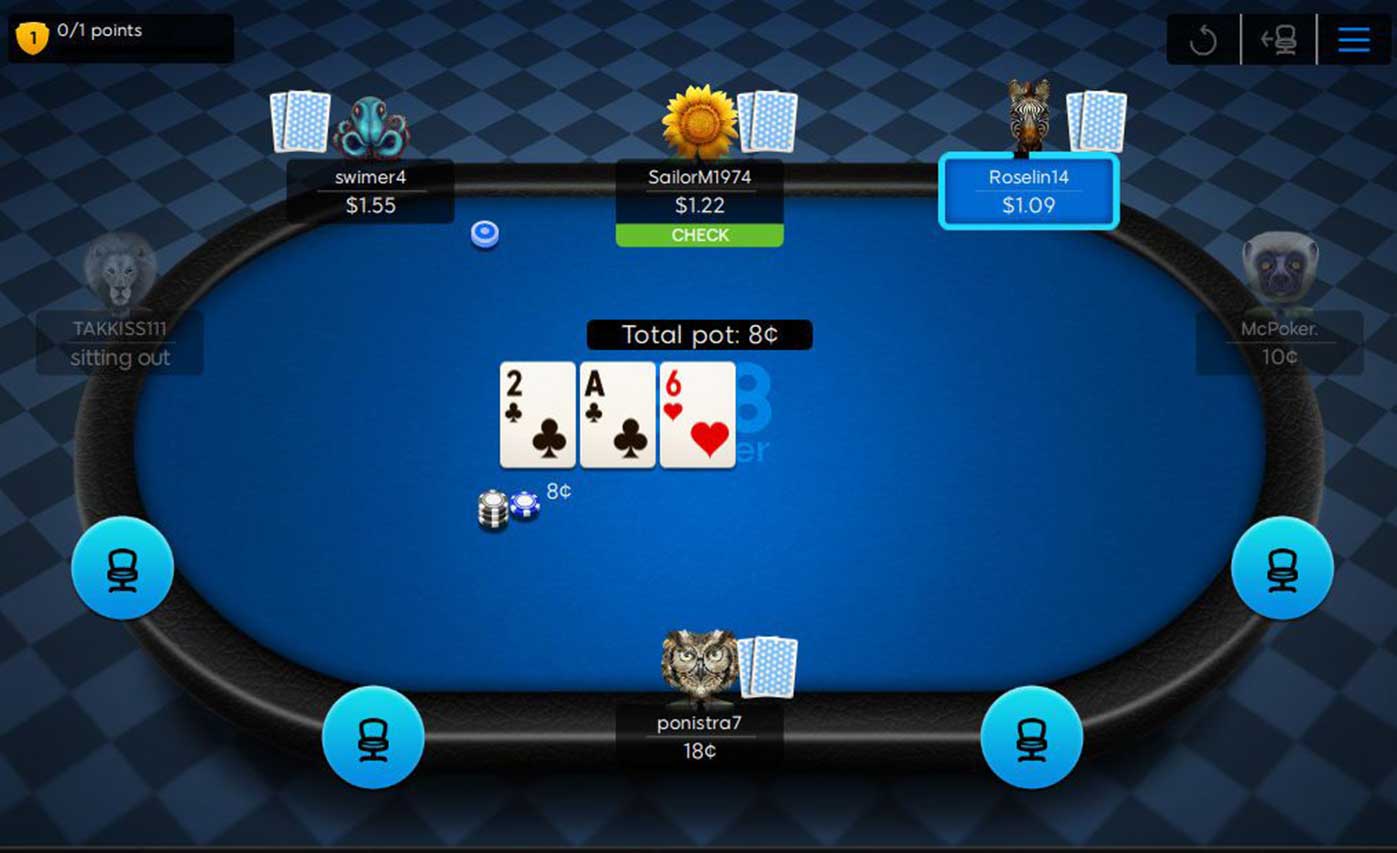
and you could open all those images and modify them. The new images would appear on your client only.
Example: modify table.jpg to add a pot odds chart instead of blank table felt.
Hex-Editing:
Another way to hack the client is to “Hex-Edit” it. Goto Download.com search for the programs by the name of “Hex Edit” and download one. Then use this program to open the client example “pokerclient.exe” . And you can view alot of information programmed into the client.
For the most part this is just an interesting way to look at how the program runs. However, in the past its been used to modify a couple interesting things such as registering banned names on that poker client. Such as “POKERCLIENT SUPPORT” or “ASSHOLEPLAYER” , etc.
Phishing
Old Method, New Target
Phishing is one of the oldest known methods of scamming people on the Internet. However, it is relatively new to online poker.
What is Phishing?
Phishing attacks use ‘spoofed’ e-mails and fraudulent websites designed to fool recipients into divulging personal financial data such as credit card numbers, account usernames and passwords, social security numbers, etc. By hijacking the trusted brands of well-known banks, online retailers and credit card companies, phishers are able to convince up to 5% of recipients to respond to them. (from Anti-Phishing.org)
Bearing On Online Poker
Recently people have been victim to this form of fraud with their online poker accounts. What happens is that they get an e-mail that looks like this :
From: support@partypoker.com
Subject: IMPORTANT Need Account Info
Hello,
Regarding your recent cash-out. PartyPoker needs to verify your account information. If you do not fill out this required information you will not get a cash-out. Click here immediately.
Regards,
Can You Cheat On Online Poker
Party Poker Support
Protect Yourself:
Click here to read information on how to protect yourself against PHISHING.
Phishing is particularly vulnerable to online poker because its legal grey area.
Collusion
Its Not An Illusion
Collusion is the most widely known method of online poker cheating.
What is Collusion?
Collusion is the co-operation of two or more players at the same table to better their odds at winning.

They could collude through telephones, instant messaging, etc. There are virtually an unlimited amount of colluding methods.
Click here to join our Members Only Section to find out EXACTLY how people do collusion!
Self-Collusion
Newest Method Of Cheating
Self-Collusion also referred to as the “Boiler Room” method. Click here to join our Members Only Section and find out exactly how Self-Collusion is accomplished.
Self-Collusion: Involves setting up a number of computers in the same room and running all of them yourself. By doing so, in theory, you could run a poker room where everyone in that room is colluding, except for one or two people. Who stand no chance.
Poker Bots
Money Making Machines
No we don’t mean Poker Playing Robots:
Poker Bots can be found at almost every room.
A Pokerbot is a utility that you set up to play online poker and win 1+ pots an hour. In order to profit without you doing anything.
Programs such as WinHoldEm, in our 3rd Party Poker Software Program section can achieve this. However, are banned in many poker rooms.
But, on the other hand – where there is a will there is a way. These people continually find new ways to dupe the poker rooms. And PokerBots continue to exist, successfully.
Poker Bonus
Live Casinos
William Hill Poker
Mansion Poker Online
bwin Poker
Cheating in poker is any behavior outside the rules that is intended to give an unfair advantage to one or more players.
Types of cheating[edit]
Cheating can be done many ways, including collusion, sleight-of-hand (such as bottom dealing or stacking the deck), or the use of physical objects such as marked cards or holdout devices or using AI and high-tech electromechanical devices like shuffling machines to manipulate the deck.
Cheating occurs in both friendly games and casinos. Cheats may operate alone, or may operate in teams or small groups.
Following is a list of terms used to categorize specific card cheats:
- card mechanic: A card cheat who specializes in sleight-of-hand and manipulation of cards, a card sharp.
- base dealer: Also called a bottom dealer, or a second dealer, this relies on two related methods that manipulate the dealing of cards.
- deadlock deck: Use of computer and AI to manipulate the game either with manipulation of RNG in online games by hacking or use of electromechanical devices like shuffling machines to manipulate the deck.
- paper player: A card cheat that exploits the use of marked cards.
- hand mucker: A card cheat that specializes in switching cards.
- machine player: A card cheat that uses mechanical holdouts.
- double deal: dealing a player two or more cards during one round of a deal.
Minimal-skill methods[edit]
The easiest and most common types of cheating require no skill of manipulation, but rather merely the nerve. Such methods include shorting the pot, avoiding house fees, and peeking at other players' cards. However, it is very difficult to prove because when confronted, at least the first time, the cheat often calls the cheating an honest mistake.
One minimal-skill method that occurs in non-casino and casino games happens when a player who has folded appoints themselves the tender of the pot, stacking chips, counting them, and delivering them to the winning player. Check-chopping is when such a 'helpful' player palms a chip. Odorless adhesive can be used for this purpose.
Another minimal-skill method is going south (also known as 'ratholing'), where a player covertly removes a portion of their chips from play while remaining in the game, normally in order to preserve the winnings as profit, or prevent a major loss in 'big bet' games.
Skilled methods[edit]
A cheat may hand-muck a card or more than one card. When a cheat is 'mucking' the cheat is cleverly hiding cards in their hand, to later switch their hand for. This may also be done with a confederate.
A skilled cheat can deal the second card, the bottom card, the second from bottom card, and the middle card. The idea is to cull, or to find the cards one needs, place them at the bottom, top, or any other place the cheat wants, then false deal them to oneself or one's confederate.
One sign of false dealing could be when a dealer grips the deck with the index finger in front of it or their pinky and pointing finger on both short sides of the deck while the other fingers support the deck while the cards are being beveled slightly. This is referred to as the 'Mechanic's Grip'. It not only allows better control of the cards, but provides cover by showing the back of the top card, and without moving the hand holding the deck.
A cheat can place certain cards in a position favorable to the card cheat. This is called 'Stacking'. Stacking is more often done than 'False dealing' because it doesn't look suspicious. There are a couple of techniques for 'Stacking' cards. The most famous are: Riffle Stacking and Overhand Stacking. By Riffle Stacking the cheat stacks the card(s) while doing a Riffle shuffle. This form of stacking is the most difficult to master and the most respected under the card sharps and magicians. The Overhand Stacking method takes little practice, and is more likely to be done in a situation with a cheat. The cheat does a (what looks like) normal Overhand Shuffle. But while the cheat is shuffling they keep track of the cards they want to stack, and with a little practice they can manage to put the exact number of cards in between the cards they want to stack to make the next round of dealing favorable for the cheat.
Even if a cheat deals themselves a powerful hand, they may not win much money if every other player has nothing, so often the cheat will stack two hands, with one player receiving a strong hand and the cheater getting an even stronger one. This is called a 'double duke'.
A slight advantage for a cheat can be to know what cards are placed both on the top of the deck as well as the bottom card, so that information can then later be used to bottom deal or second deal themselves that card. The looking at the top or bottom card without the other players knowing or seeing it is called 'Glimpsing' or 'Peeking'. There are a lot of methods for reaching the same goal. A method that is used most is called the 'Shiner'. A Shiner is a reflective object (such as coffee, a lighter, a blade etc.) that is placed under the deck, so when the cheat is looking into the shiner the bottom card is exposed, and every card that is dealt over the shiner can easily be peeked by looking in the shiner.

One method of cheating that involves both great risk and great potential pay-off is the cold deck—so called because it has not been 'warmed up' by play (and thus randomised). Such decks are usually pre-stacked, and are introduced either at the deal, after the real deck has been shuffled, or before the deal, where a card sharp will make a false shuffle using sleight of hand. The latter method may require collusion or a pass if the style of play or house rules call for a cut. The skill lies both in convincing other players that the shuffle is legitimate and in ensuring that other players receive hands that are good enough to entice them into play, but not too good to arouse suspicion.
Marked cards[edit]
How To Cheat At Online Poker
Marked cards are printed or altered so that the cheater can know the value of specific cards while only looking at the back. Ways of marking are too numerous to mention, but there are certain broad types. A common way of marking cards involves marks on a round design on the card so as to be read like a clock (an ace is marked at one o'clock, and so on until the king, which is not marked). Shading a card by putting it in the sun or scratching the surface with a razor are ways to mark an already printed deck.
Juice and 'daub' are two kinds of substances that can be used to mark cards in a subtle way so as to avoid detection, when done properly. While a 'juice' deck is premarked and introduced into play by the cheater, 'daub' is applied during play to any deck. Once trained, cheaters can read the cards from across the table.
Decks can be marked while playing using fingernails, poker chips or by bending or crimping the cards in a position that the cheat can read from across the table. The practice of burning the top card, or cards, is to prevent a cheat from knowing that top card and dealing 'seconds' to either give a confederate a card that helps their hand or an opponent a card that hurts theirs.
Collusion[edit]
Collusion is two or more players acting with a secret, common strategy.[1] Some common forms of collusion are: soft play, that is, failing to bet or raise in a situation that would normally merit it, to avoid costing one's partner or friend money; whipsawing, where partners raise and re-raise each other to trap players in between; dumping, where a cheater will deliberately lose to a partner; and signalling, or trading information between partners via signals of some sort, like arranging their chips in a certain manner.
In a poker tournament, when one player is all in and two other players are active in the pot, it is common for the two players with chips left to 'check it down', or check on each round of betting through the end of the hand. Unless they explicitly communicate an agreement about checking it down, this is not collusion.[2]
Online specific[edit]
Online play has allowed for new methods of cheating while other methods based on physical objects such as cards or chips are impossible.
One new form of cheating is the use of bots. These are programs that play instead of a real human. Though their accuracy and their ability to win are disputed, their use normally violates the rules of online cardrooms, so using them is, by definition, cheating.[3][4]
Collusion in online poker is relatively easy and much more difficult to immediately spot if executed well. Cheaters can engage in telephone calls or instant messaging, discussing their cards, since nobody can see them. Sometimes one person may be using two or more computers to play multiple hands at the same table under different aliases (since many broadband plans offer customers multiple IP addresses, this can conveniently and cheaply be done without the likelihood of immediate detection). Such tactics can give cheaters an advantage that is difficult to work against. However, online poker cardrooms keep records of every hand played, and collusion can often be detected by finding any of several detectable patterns (such as folding good hands to a small bet, as it is known that another player has a better hand). Users who frequently sit at the same tables will be flagged by poker rooms and their play will be closely monitored. Often, such users will be warned they have been flagged, in an effort to deter collusion.
Another online method of cheating is 'multiaccounting', where a player will register several accounts to their name (or, perhaps more commonly, to non-poker-playing friends and family members). This might be done to help enable the collusion previously mentioned, or perhaps to simply enable a well-known player to play incognito. However, another common motive for multi-accounting is to facilitate chip dumping and other methods of equity maximization in online tournaments. A major difference between cash games and tournaments is that tournament winnings tend to be much less consistent over the short to medium term. Because tournaments tend to pay prize money only to the top ten percent of entrants on average and tend to pay the majority of prize money to a very small number of top finishers, in tournament play even the best players are prone to relatively long streaks of overall net losses (or even no winnings at all) between sizable wins. Therefore, for high-stakes players who specialize in tournament play, multi-accounting is one possible means to allow a player to play more entries in major tournaments than they would otherwise be able to, potentially multiplying the player's earnings and, just as importantly, making earnings more consistent over a shorter period of time. However, the risk is that a large win by hitherto unknown 'player' may attract scrutiny from the host (and other players), especially if the winner has no known previous poker experience but does have clear ties to a better-known player. In addition, some sites now offer multi-table tournaments where the same player can enter multiple times under their own name, so as to reduce the incentive to multi-account.
Another concern is datamining. This is the systematic collection of hand histories, enough of which can be used to profile opponents using specially designed software. Two or more players may agree to share their individual hand histories amongst themselves; alternatively some websites offer large quantities of previously-played hands (even millions) for a fee. Using software to analyze one's own histories is generally accepted, however acquiring histories of hands in which a player did not participate violates the rules of most cardrooms.
Poker software, like all software, cannot be assumed to be reliable. It is always possible that a person is exploiting the software to win money from victims. The software may even contain a backdoor which allows a person, perhaps an employee, to view cards. Absolute Poker was engaged in such a scandal along with site consultant and notable poker player Russ Hamilton. As of 2007, Ultimate Bet faces a lawsuit with allegations of employees exploiting the software.[5] The user agreement of the two online poker sites owned by Tokwiro Enterprises, Absolute Poker and UltimateBet, state they reserve the right to cancel an account if a player plays 'in a professional sense' (and not for personal entertainment only).[6][7] However, this is not a standard prohibition. For example, it is not in the end-user agreements of the three largest online cardrooms: PokerStars, PartyPoker, and Full Tilt Poker.
Angle shooting[edit]
Angle shooting is engaging in actions that may technically be within the scope of the rules of the game, but that are considered unethical or unfair to exploit or take advantage of another player. For example, an angle shooter might motion as if they were folding their hand to induce other players to fold theirs out of turn.
One form of angle shooting which is exclusive to online poker is to abuse the disconnect protection (DP) rules most sites have in place. DP is a rule exclusive to online poker whereby if a player is disconnected from the site in the middle of the hand their hand is played out as if they were all-in without the player actually having to put any more money in the pot. The online poker rooms that offer DP usually have specific tables set aside for this so that all players at the table are aware that the special DP rules will apply.[8]
How this is used by angle shooters is if a player is in a hand that they are unsure if they have the best cards and don't want to invest any more money to find out. They can unplug their internet connection and then wait for the hand to play itself out. On a DP table the remaining cards in the hand would be dealt and the pot would be awarded to the player with the best cards. If there were multiple opponents in the hand then they would be eligible for a side pot.[citation needed]
Famous poker cheats[edit]
- Soapy Smith (1860-1898)
How To Cheat On Online Poker
Cheating in poker in popular culture[edit]
See also[edit]
Notes[edit]
- ^T. Hayes, 'Collusion Strategy and Analysis for Texas Hold'em', 2017
- ^Is 'checking it down' in a tournament implicit collusion?Archived May 10, 2006, at the Wayback Machine
- ^PokerStars.com: End User License Agreement
- ^PartyPoker.com: PartyGaming’s Unfair Advantage PolicyArchived 2007-10-16 at the Wayback Machine
- ^Online poker cheating blamed on employee, by Mike Brunker, at NBC News; published October 19, 2007; retrieved November 25, 2018
- ^AbsolutePoker: End-User License AgreementArchived October 18, 2007, at the Wayback Machine
- ^Ultimatebet.com: End User License AgreementArchived October 11, 2007, at the Wayback Machine
- ^Bill Rini: The Definitive Guide to Online Poker Cheating
External links[edit]
Ways To Cheat In Poker
- Poker Cheating by Arnold Snyder